
|
|
VOLUME I · WEEK 2 · ISSUE #002
|
|
| |
The road that outlasted the empire that built it
|
|
April 2026 · 5 min read
|
|
The man who built Rome's greatest road was blind.
|
|
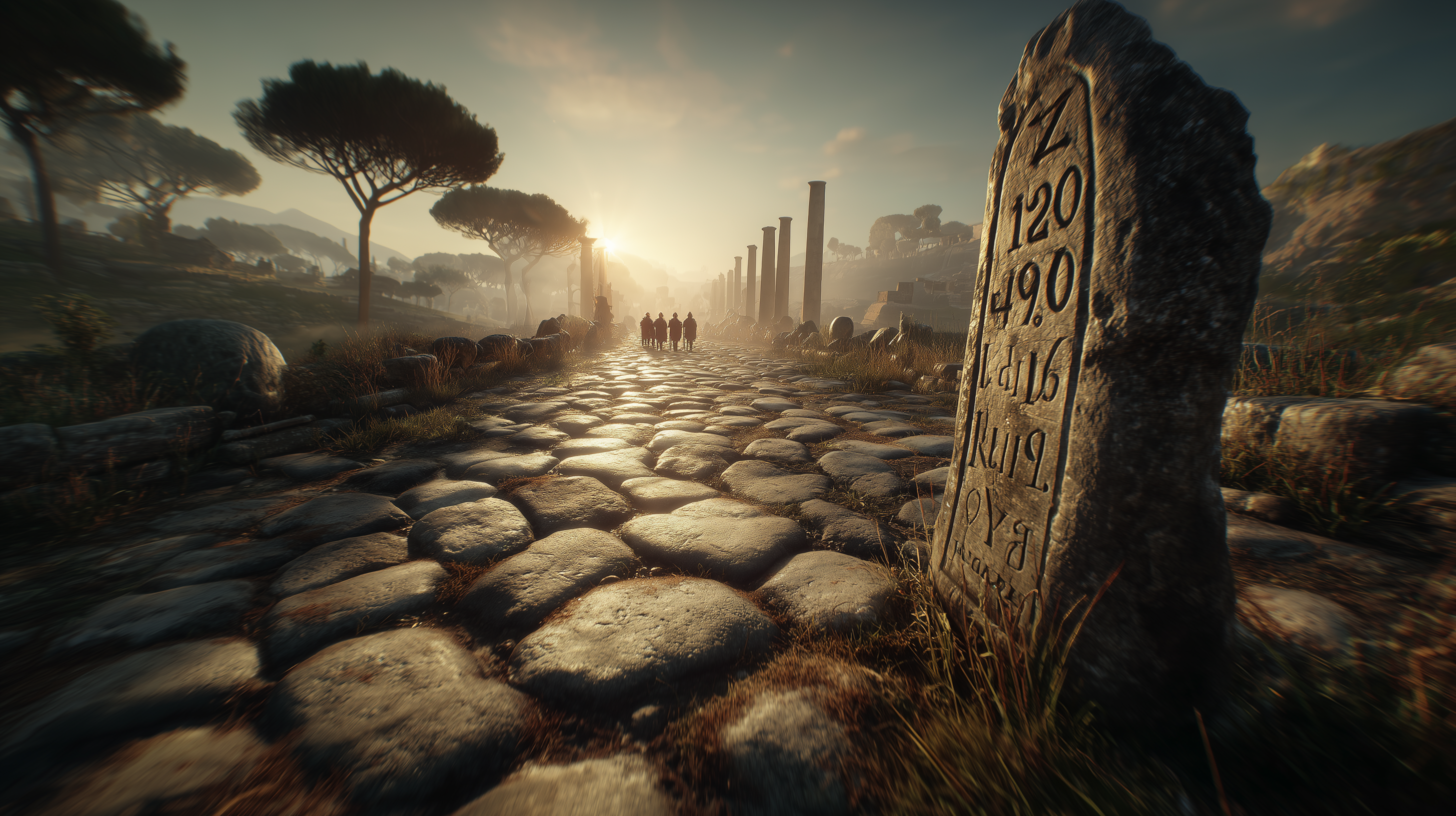
Appius Claudius Caecus - "caecus" means blind - spent the entire state treasury on two projects simultaneously in 312 BC: Rome's first aqueduct and the road that would carry his name for the next two thousand years. He didn't ask the Senate for permission. He just started building.
|
|
The Via Appia ran south from Rome to Capua, 132 miles through some of the worst terrain in Italy. Thirty-one kilometers of it crossed the Pontine Marshes - a malarial swamp so dangerous that Appius also tried to drain it. He failed at that.
|
|
The road held.
|
|
|
Layer by layer. Stone by stone.
|
| |
|
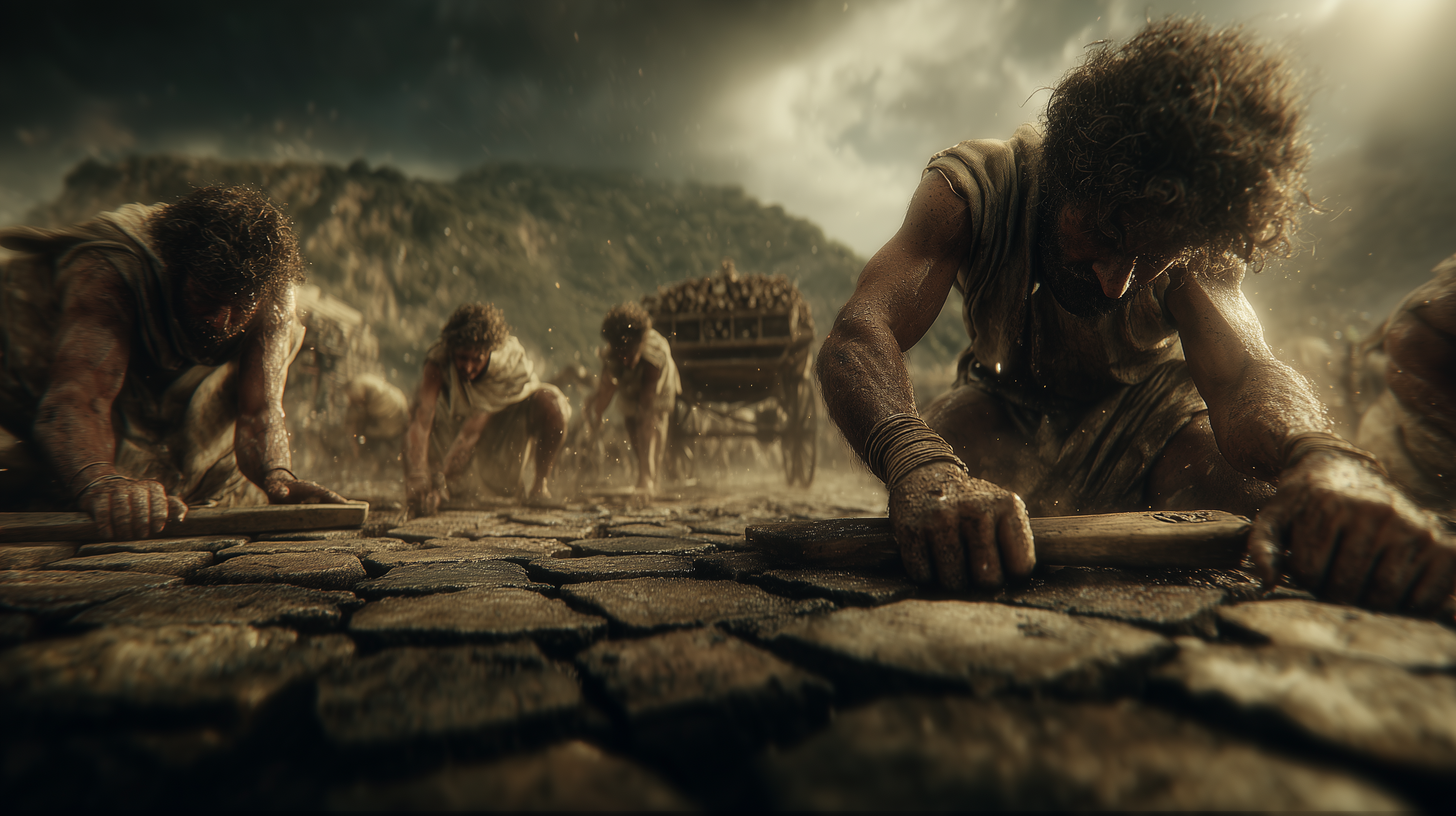
Here's what a cross-section looked like: dig down a meter and a half. First layer, large foundation stones packed tight. Second, crushed rock mixed with morite. Third, a concrete-like slurry tamped smooth. Top layer, dark volcanic basalt - polygonal blocks cut and fitted so precisely that the Byzantine historian Procopius, writing eight hundred years later, said the stones appeared to have grown together naturally, as if placed by the earth itself.
|
|
The surface was cambered - crowned in the center so rainwater ran off into drainage ditches on either side. Raised sidewalks flanked the road. Carved milestones marked every Roman mile, roughly 1,480 meters. A shorter mile than ours. They needed more of them.
|
|
Roman surveyors used an instrument called the groma - an iron cross mounted on a pole with four hanging plumb bobs - to achieve the roads' famous straightness. They'd set up on a hilltop, sight a line to the next hill, and cut a path between them that didn't deviate. The only complete groma ever found was buried at Pompeii in 79 AD. Archaeologists dug it up in 1912, still intact.
|
|
Every legionary was a road builder. This wasn't contracted work - the army built the roads as standard military duty. The men who would march the roads also laid the stones. They were building their own supply lines, and they knew it.
|
|
By the empire's peak, the network stretched across three continents. A 2025 study published in Nature Scientific Data mapped nearly 300,000 kilometers of Roman roads - 59% more than previously documented. Twenty-nine great highways radiated from Rome. Over 7,000 milestones survive. And yet only 2.7% of the mapped roads have precisely confirmed locations. The rest are traced from ancient itineraries, aerial photography, and the stubborn straightness of modern roads that follow paths laid two millennia ago.
|
|
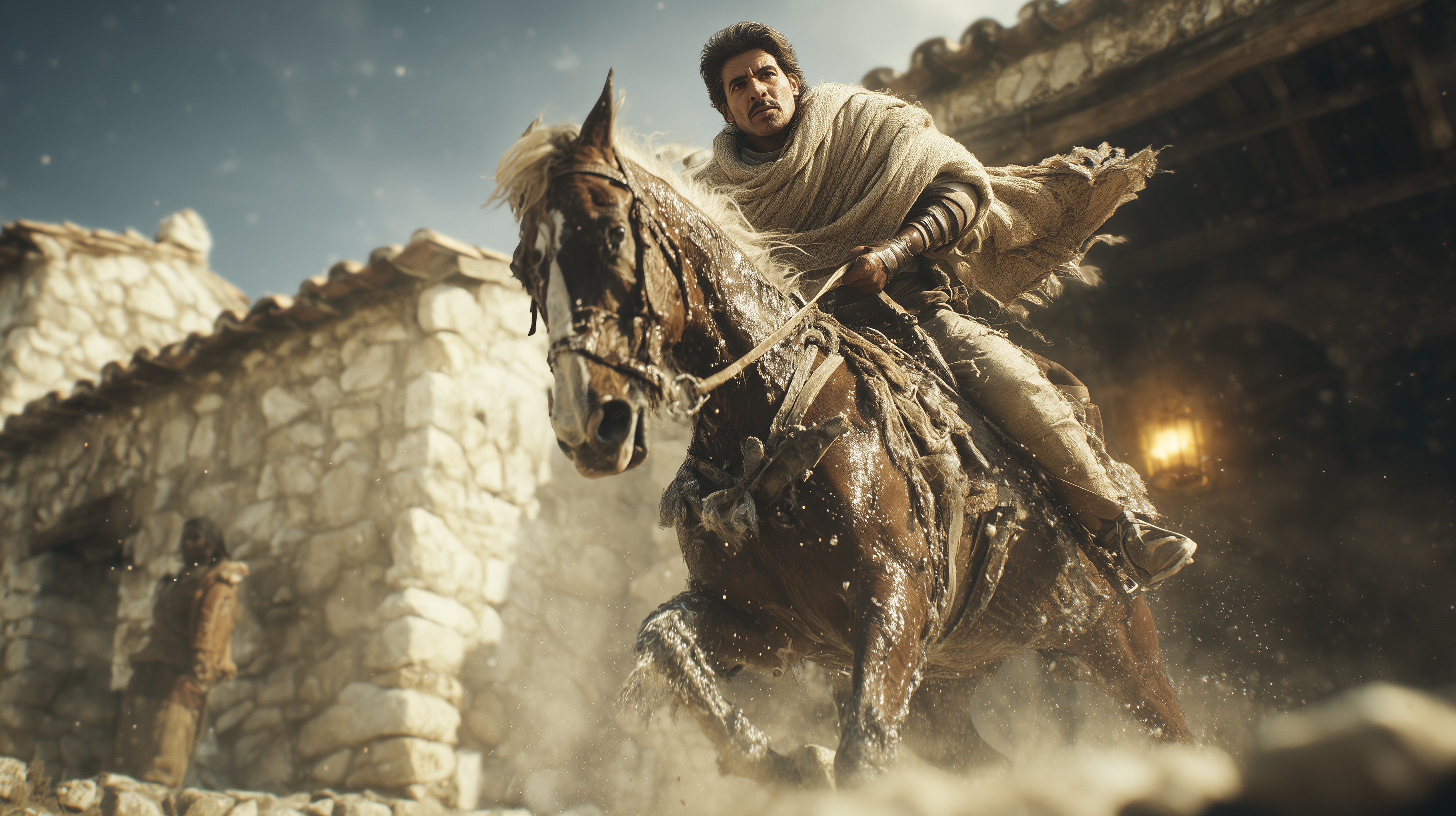
Augustus formalized the system in 20 BC. He erected the Milliarium Aureum - the Golden Milestone - a gilded bronze column in the Forum, the symbolic point where every road in the empire converged. Then he built the cursus publicus, a government relay network of horse-change stations every 18 kilometers and full waystations every 37. A courier carrying imperial dispatches could cover 80 kilometers in a day. In emergencies, over 160.
|
|
|
The cursus publicus. A fresh horse. The message doesn't stop.
|
| |
|
The same roads that carried legions likely carried plague. The Antonine Plague - possibly smallpox - swept the empire between 165 and 180 AD, killing an estimated five million people. It followed the trade routes. It followed the roads.
|
|
The poet Statius called the Via Appia Regina Viarum - Queen of Roads. But the Roman historian Dionysius of Halicarnassus had a different take on what made Rome extraordinary. He listed three achievements: the aqueducts, the paved roads, and the construction of the sewers. The sewers made the top three. He wasn't wrong.
|
In 71 BC, after crushing the slave revolt led by Spartacus, the Roman general Crassus crucified 6,000 captured rebels along the Via Appia. One cross roughly every 30 meters, stretching 200 kilometers from Capua to Rome. The bodies were never taken down.
The road that connected an empire also displayed what happened to those who challenged it.
|
|
| |
|
There's a McDonald's outside Rome with a glass floor.
|
|
If you look down while eating a Big Mac, you can see Roman paving stones and human skeletons in a two-thousand-year-old drainage gutter.
|
|
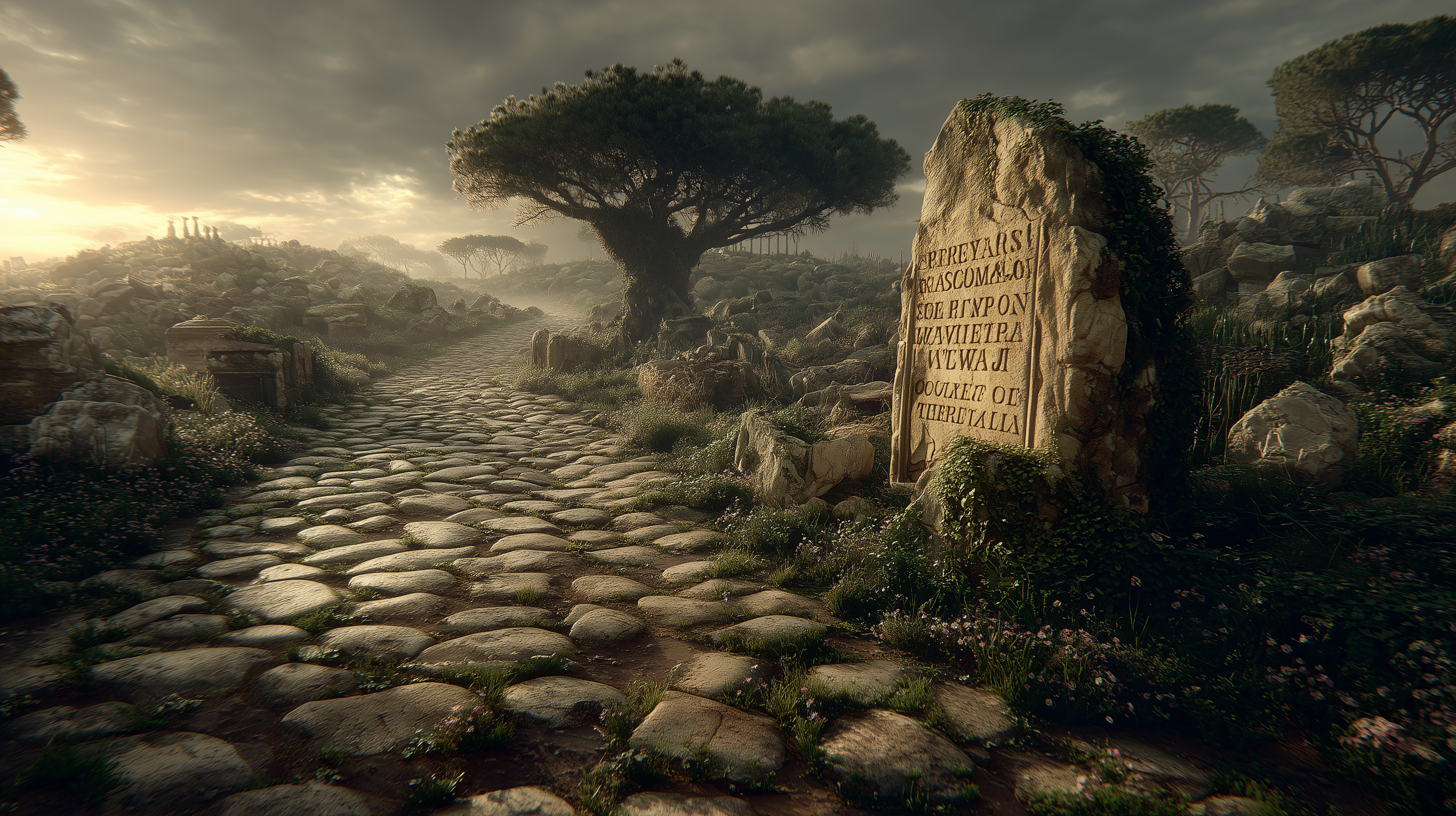
The road is still there. It's always still there.
|
| |
|
|
The engineering still holds its line.
|
| |
|
|
| |

|
|
The Golden Nuggets
|
| ◆ |
The man who built Rome's greatest road also tried to kill the letter Z.
Appius Claudius reportedly removed Z from the Latin alphabet because the sound resembled "the teeth of a corpse." Z was only restored centuries later when Rome conquered Greece and needed it for Greek loanwords.
|
|
| ◆ |
"All roads lead to Rome" is medieval, not ancient.
The phrase first appears around 1175 AD, from the French theologian Alain de Lille. But Augustus's Golden Milestone in the Forum was real - the symbolic convergence point of every road in the empire. Its exact location has never been found archaeologically.
|
|
| ◆ |
A courier carrying bad news was marked differently.
Victory dispatches had a laurel branch attached. A messenger bearing bad news carried a feather on his spear - the signal to clear the road and let him pass faster.
|
|
| |

|
|
The Rabbit Hole
|
In November 2024, archaeologists in London found Watling Street - one of Britain's oldest Roman roads - buried directly beneath the Old Kent Road. It was the first physical proof that sections of the Roman network survive under modern city streets, not just in alignment but in actual stone.
The road was built nearly 2,000 years ago for legions marching north from the Channel coast. Today, 15,000 cars drive over it every day. Most of them have no idea what's underneath.
|
|
| |

|
|
Go Deeper
|
Read
Surveying Instruments of Greece and Rome
by M.J. Lewis. The only complete groma ever found was buried at Pompeii. This book explains how Roman engineers built impossibly straight roads with tools that fit in a saddlebag.
GET THE BOOK →
|
|
Read
The Roads of Roman Italy
by Ray Laurence. Goes beyond engineering into what the roads actually did - how they moved people, culture, and disease across three continents.
GET THE BOOK →
|
|
Read
The Roads of the Romans
by Romolo Staccioli. The visual companion. Packed with photos, maps, and diagrams of the 50,000-mile network from city streets to the Via Appia.
GET THE BOOK →
|
|
Walk
The Via Appia Walking Route, Italy
360 miles from Rome to Brindisi, modeled on the Camino de Santiago. UNESCO World Heritage Site as of 2024.
|
|
Visit
The McDonald's Glass Floor, Marino
Roman paving stones and skeletons visible beneath the restaurant, near Frascati south of Rome. Order a coffee and look down two thousand years.
|
|
| |
|
Which Roman engineering feat impresses you most?
Reply and tell me. I read every one.
|
| |
| |
|
|
